The global transition to electric vehicles (EVs) is revolutionizing the automotive industry at an unprecedented speed. Battery technology has become the focus of innovation as manufacturers work to increase vehicle range, safety, efficiency and sustainability.
Every electric vehicle is built around the battery pack, a complex system that requires robust protection but also has to be as light as possible. This challenge has resulted in a surge in demand for aluminum extrusions in battery enclosure design.
Today, aluminium is the preferred material for battery trays, battery housings and structural battery systems, due to its unique combination of strength, light weight, corrosion resistance and design flexibility. Next-generation EV platforms are evolving and aluminum extrusions are helping to enable safer, lighter and more efficient electric vehicles.
Why Battery Enclosures Are Essential in EV Design
The battery packs are arguably the most valuable and complex parts of an electric vehicle. They are to be protected from:
- Effects of roads
- Vibration and mechanical stresses
- Moisture and pollution
- Burning or freezing
- Crashing power
- Chronic environmental exposure
At the same time, manufacturers need to keep the overall vehicle weight as low as possible to maximize driving range and energy efficiency.
This poses a unique engineering challenge that requires advanced materials that can provide both protection and light weight performance.
The Growing Adoption of Aluminum for EV Battery Enclosures
As EV adoption grows, automotive engineers are turning more to EV battery enclosure aluminum solutions to meet performance targets.
Several distinct benefits come with aluminum:
- High strength to weight ratio
- Great corrosion resistance
- High energy absorption characteristics
- Flexibility in design
- Thermal management capability
- Longevity
- Completely recyclable
These properties make aluminum an ideal candidate for battery enclosure applications where safety and performance go hand-in-hand.
Why Lightweight Battery Enclosures Are Critical for EV Range
Battery performance and driving range depend directly on vehicle weight.
The heavier the vehicle, the more energy is needed to move it. This can lower efficiency and increase battery needs.
This is why electric vehicle manufacturers are focusing so much on lightweight battery housing solutions.
Benefits of Lightweight Battery Enclosures
- Longer range
- Greater vehicle efficiency
- Improved acceleration and handling
- Lower energy use
- Lesser weight of the overall vehicle
Aluminum extrusions offer the structural strength to protect the battery, while helping manufacturers meet aggressive weight reduction targets.
Battery Tray Extrusion: The Foundation of Battery Pack Design
Battery tray is one of the most important applications of aluminium extrusion in EV.
Battery tray. A battery tray is a structural base for supporting and securing the battery modules in the vehicle.
Current battery tray extrusion designs need to consider:
- Battery cells & modules
- Refrigeration devices
- Electrical connections
- Improvements in infrastructure
- Crash protection features
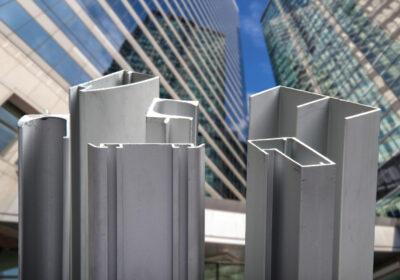
Extrusion allows for the creation of highly customized cross-sectional profiles, so engineers can combine multiple functions into one component.
This results in less parts, easier assembly and better manufacturing efficiency.
Electric Vehicle Battery Protection and Safety Requirements
Safety is one of the most important considerations in EV design.
The battery enclosures shall protect the high voltage systems from normal operating conditions and from severe crash events.
Electric Vehicle Battery Protection Systems are meant to:
Impact Resistance
Battery packs have to endure road debris, underbody impact and crash forces.
Heat Protection
Battery systems produce heat during operation and charge. Good thermal management helps keep performance and safety high.
Environmental Protection
Enclosures shall prevent water, dust and contaminants from contacting sensitive battery components.
Structural Integrity
The enclosure often contributes to overall vehicle rigidity and crash performance.
Aluminum extrusions allow manufacturers to meet these needs with exacting engineering and strong structural performance.
The Thermal Management Advantages of Aluminum
Temperature control is critical for battery performance and life.
Too much heat can:
- Battery performance reduction
- Speed up degradation
- Impacts charging performance
- Increase safety hazards
Aluminum is a good heat conductor, meaning it is better at moving heat away than many other materials.
This makes aluminum especially useful for:
- Cooling systems for batteries
- Thermal management channels
- Heat-dissipating structures
- Integrated cooling plate designs
As battery technology advances, thermal management will continue to be a key benefit of aluminum-based enclosure systems.
Aluminum Structural Components in Modern EV Platforms
But aluminium isn’t just for battery trays.
Aluminum structural components are increasingly being incorporated into EV architectures today.
Applications include:
- Battery enclosure frame
- Crossmembers
- Structures for crash management
- Reinforcement girders
- Side impact protection systems
- Châssis parts
Lightweight performance coupled with structural functionality allows manufacturers to improve the safety of vehicles and energy efficiency.
How Extrusion Technology Enhances Design Freedom
One of the biggest benefits of aluminum extrusion is design freedom.
Extrusion technology allows engineers to design custom profiles engineered to meet specific vehicle requirements.
Integrated features might include:
- Cooling channels
- Mounting systems
- Cable routing paths
- Structural ribs
- Strengthening zones
- Assembly interfaces
This enables manufacturers to combine components and optimize vehicle packaging.
The result is a more efficient and less costly battery enclosure design.
Sustainability and the Future of EV Manufacturing
Sustainability is one of the main drivers for adoption of electric vehicles and the material selection is an important aspect in achieving sustainability goals.
Aluminum is sustainable because it is:
- 100% recyclable
- Lightweight and power-efficient
- Strong and long-lasting
- Suitable for circular economy initiatives
Use of low-carbon and recycled aluminum is increasingly being incorporated into the manufacturing strategies by automotive manufacturers.
This trend is expected to accelerate as governments and consumers increase their focus on sustainability across the vehicle lifecycle.
The Role of Can Art Aluminum Extrusion in EV Battery Solutions
Can Art Aluminum Extrusion is supporting the automotive industry’s move towards electrification, with advanced extrusion capabilities tailored for demanding EV applications.
They have expertise in:
- Manufacture of precision aluminum extrusions
- Custom battery tray extrusion solutions
- Complex structural profiles development
- Tight tolerances control
- Advanced machining and fabrication services
- High quality finishing solutions
- Automotive program production scalability
Leveraging engineering expertise and advanced manufacturing technology, Can Art Aluminum Extrusion helps automotive manufacturers design high-performance aluminum solutions that meet the evolving needs of electric vehicle platforms.
“With the increasing demand for efficient, lightweight and durable battery systems, Can Art Aluminum Extrusion is committed to supporting innovation across the EV supply chain.”
The Future of Aluminum in EV Design
The next generation of electric vehicles will demand even greater demands on battery performance, safety and efficiency.
Emerging developments are:
- Structural battery packs
- Bigger battery sizes
- Systems for rapid charging
- High-end heat management technologies
- Low-mass vehicle architectures
Aluminum extrusions are uniquely positioned to support these advances due to their combination of strength, flexibility and sustainability.
As EV platforms advance, aluminum will remain a foundational material in battery enclosure engineering and vehicle lightweighting.
Final Thoughts
Electric vehicle manufacturers are still trying to strike the right balance between safety, efficiency, performance and sustainability. Aluminum extrusions provide an ideal solution that combines lightweight strength, superior corrosion resistance, thermal management benefits and exceptional design flexibility.
Extrusion technology is shaping the future of electric mobility, from aluminum systems for EV battery enclosures and battery tray extrusion designs to advanced aluminum structural components.
By partnering with seasoned manufacturers like Can Art Aluminum Extrusion, automotive companies can design cutting-edge battery enclosure solutions that fulfill the demanding standards of future electric vehicles, while also supporting long-term performance and sustainability goals.