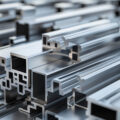
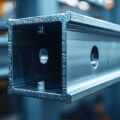
Regarding aluminum extrusion, design is only half of the battle. The other piece, often underestimated, is tolerance.
It’s one of those things that you really don’t notice early on, but which can become a problem quite quickly if it’s not noticed. Designing for a tight fit, structural performance, or ease of assembly all depend on aluminum extrusion tolerances, and getting it right the first time is critical.
Let’s dissect it in a way that really helps you decide better.
What Are Aluminum Extrusion Tolerances?
Simply put, tolerances determine how far a dimension can deviate from its intended value.
No manufacturing process is perfectly accurate, and extrusion is no different. The final form is affected by parameters, like heat and deformation behaviour of the material, as well as die design. That’s the reason why dimensional accuracy for extrusion is always accompanied by an acceptable range, not a definitive number.
For engineers, the aim is not zero variation, it’s controlled and predictable variation.
The Importance of Tolerances in Extrusion Projects
Tolerances aren’t a minor detail, they shape how your product performs and fits together.
Getting them right helps:
- Ensure proper fit during assembly
- Minimize the requirement of secondary machining
- Avoid costly redesigns or delays
- Maintain consistency across production runs
Conversely, a tolerance that is too tight can drive up costs with no real added value. It’s all about balance.
What Affects Extrusion Dimensional Accuracy?
Precision Aluminum Extrusion In Process Several factors play a role in precision aluminum extrusion:
Alloy Selection
Different alloys react differently under heat and pressure. Softer alloys, such as 6063, allow good surface finish and tight control better than stronger ones.
Profile Complexity
The more complex the shapes, the folding is harder to control. As geometries grow more complex, thin walls, asymmetry, hollow sections, tight tolerances become harder to hold.
Die Design and Quality
The final profile is shaped mostly by the extrusion die. Even minor uniformities in die design can influence consistency.
Cooling and Handling
If not controlled, slight distortions can also appear due to post-extrusion cooling. The way it handles during this phase is more important than most people realize.
Production Volume
Consistency improves with stable, repeat production, but first runs may have minor discrepancies as processes are dialed in.
Understanding Aluminum Tolerance Standards
This is where it gets a bit more structured.
Most extrusion projects leverage existing aluminum tolerances standard to establish contours for acceptable limits. These standards facilitate the reconciliations of expectations between engineers, manufacturers and quality teams.
Common references include:
- Industry-specific extrusion engineering guidelines
- Regional and international standards
- ISO framesets, that deliver international standards for dimensional accuracy and quality
Whereas tolerances are usually established up front by the designer based on a new application, engineers often start with this kind of shell and modify it.
When Are Tight Tolerances Necessary?
Not all projects need ultra-high precision.
When these criteria are true, tighter tolerances usually matter:
- Components have to mesh with a very small gap
- The extrusion mates with machined or pre-fabricated components
- Aesthetic fit is very important (joints visible, finishes seamless)
- The device is employed in high-end applications
But here’s the kicker, tight tolerances are expensive. They might just need slower production speeds, more quality checks or secondary processes.
The better question, then is: Do you really need them?
Designing with Tolerances in Mind
Rather than viewing tolerances as a limiting factor, designing around them is beneficial.
A few practical approaches:
- Don’t over-specify dimensions when there is flexibility
- Where possible provide for clearance in assemblies
- When tight control is needed, keep it simple geometry
- Ensure the tolerance expectations are in line with actual manufacturing capability
This is where extrusion engineering guidelines come into play, bridging the gap between design intent and production reality.
How Can Art Aluminum Extrusion Supports Precision
Experience counts when tolerances begin to tighten.
At Can Art Aluminum Extrusion, it’s not about hitting numbers on a drawing either: It’s understanding where precision truly makes a difference in performance. This means working closely with engineers right at the start of the process to assess profile design, alloy behaviour and possible extrusion tolerances before production commences.
Such frontline cooperation works:
- Determined where tighter tolerances are really needed
- Do not over-engineer that costs money
- Improve overall extrusion dimensional accuracy
- Ensure consistency across production runs
It’s a more broady feasible approach, one that marries precision aluminum extrusion with real-world manufacturability.
Finding the Right Balance
Precision, cost and manufacturability will always come at a trade-off with each other.”
- Too slack, and you could have performance issues
- So too tight and you add complexity and cost
The aim is to determine that middle ground, where extrusion dimensional accuracy meets real-world workability.
Final Thoughts
Tolerances may seem like a secondary detail in design, however when it comes to any successful extrusion project they are of key importance.
When you understand how aluminum extrusion tolerances function , and what affects them, from design to materials to process , you will be in a much better position to make decisions.
It is not about perfection at the end of the day. It’s about intentionality in design, constraints grounded in reality, and creating something that behaves precisely as it ought.