Aluminum extrusion is just the first step in a long manufacturing process. Generally, an extruded profile needs to undergo further processes to fulfill functional, structural, and aesthetic purposes. That is where CNC machining and fabrication enter the picture.
Aluminum CNC machining converts raw extrusions into end-use parts, creating intricate cutouts and complex structures for use in a variety of industries. In this guide, we will discuss how machining and fabrication complement each other in aluminum parts design and development, the benefits of their combination, and what to keep in mind when designing an aluminum part.
WHAT IS ALUMINUM CNC MACHINING?
CNC machining of aluminum is the application of computer-controlled tools to cut, shape, and finish high-accuracy aluminum components. CNC (Computer Numerical Control) machining guarantees very uniform and precise accuracy across long production runs, unlike manual machining.
Generally, aluminum extrusions go through the following CNC machining processes:
- Cutting profiles to exact lengths
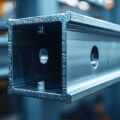
- Drilling holes and slots
- Milling complex geometries
- Tapping threads
- Creating custom features for assembly
Due to its lightweight, corrosion-resistant, and machinability properties, aluminum is one of the most common materials used in CNC manufacturing.
UNDERSTANDING ALUMINUM EXTRUSION FABRICATION
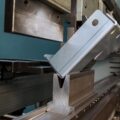
Aluminum extrusion fabrication is the term commonly used for secondary processes applied after extrusion, which convert raw aluminum profiles into finished goods.
These processes include:
- Cutting for precise dimensions
- CNC machining for detailed features
- Welding and assembly methods for structures
- Anodizing or powder-coating surface finishes
- Assembly of multiple components
Fabrication fills the gap between a basic extrusion and a useful part that meets design, performance, and application needs.
THE MAIN ADVANTAGES OF CNC MACHINING ALUMINUM PROFILES
High Precision and Consistency
CNC machining is capable of achieving extremely tight tolerances, ensuring every part adheres to exact specifications. This is essential in industries like automotive, aerospace, and electronics.
Design Flexibility
Machining enables the formation of complex geometric shapes that cannot be achieved by extrusion alone. It allows engineers to design without compromise.
Faster Production Cycles
Machining is ideal for medium to high-volume runs, as it reduces production time while maintaining quality.
Material Efficiency
Aluminum machining creates much less waste compared to other materials, making it cost-effective and environmentally friendly.
Superior Surface Finish
Aluminum machined parts require little to no post-processing, which helps reduce overall production costs.
TYPES OF CNC MACHINING PROCESSES FOR ALUMINUM EXTRUSIONS
Milling
Used for creating slots, pockets, and complex shapes in aluminum profiles.
Drilling
Used for making holes for fasteners, wiring, or fluid passage.
Turning
Used when cylindrical features are required.
Tapping
Used to produce internal threads suitable for screws and bolts.
Routing
Ideal for thin profiles and rapid processing.
All of these processes are involved in creating high-quality CNC aluminum parts for specific applications.
APPLICATIONS OF CNC ALUMINUM PARTS
Industries that employ CNC-machined aluminum extrusions include:
- Automotive: Frames, brackets, and structural components
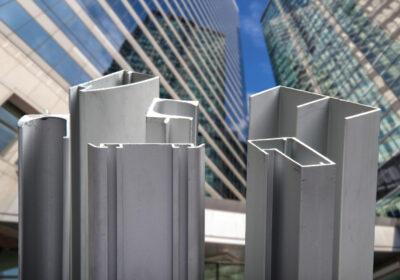
- Installation: Window frames, curtain walls, and support systems
- Electrical: Heat sinks, enclosures, and housings
- Product categories: Modular systems and decorative applications
- Industrial equipment: Custom components and machine frames
Their features and overall performance have made them one of the most affordable high-performance material options in the market, resulting in continuous demand among engineers and designers.
MACHINING ALUMINUM PROFILES: DESIGN CONSIDERATIONS
CNC machining demands well-planned design for cost-effective and efficient production.
Tolerances
Higher tolerances increase fabrication time and cost. Specify only what is required for functionality.
Wall Thickness
Uniform wall thickness leads to easier machinability and reduces the risk of deformation.
Tool Access
Avoid complex setups and ensure designs allow cutting tools to easily access all areas.
Material Selection
Different aluminum alloys offer varying strengths, corrosion resistance, and machinability.
Surface Finish Requirements
Define finishing requirements early to avoid unnecessary secondary processes.
CHALLENGES IN ALUMINUM CNC MACHINING
Although aluminum is highly machinable compared to many metals, it does present some challenges:
- Long chips can be problematic during machining, requiring proper chip control
- Incorrect tooling can lead to inefficiency
- Excess heat can negatively impact dimensional precision
- Poor craftsmanship can result in rough surfaces and defects
With the right tools and processes, these challenges can be effectively managed.
CAN ART ALUMINUM EXTRUSION: CNC MACHINING & FABRICATION ROLES
Can Art Aluminum Extrusion is a key player in providing aluminum extrusion fabrication solutions for high-end clients. They bring a fully integrated approach, combining extrusion, CNC machining, and finishing under one roof.
Their capabilities include:
- High-precision CNC machining of aluminum sections
- Specialized fabrication for unique project needs
- Precise tolerance processing for high-performance applications
- High-level automation for consistent quality and efficiency
- End-to-end solutions, from raw extrusion to finished product
With the success of Can Art Aluminum Extrusion and a team that understands how to optimize design, extrusion, and machining processes, components are manufactured to meet even the most stringent industry requirements at reduced costs.
CHOOSING THE RIGHT MANUFACTURING PARTNER
Choosing the right aluminum CNC machining partner is crucial to achieving desired results.
Look for:
- 3–5 years of direct experience in aluminum extrusion fabrication
- Advanced CNC machining capabilities
- Strong quality control processes
- Capability for both small and large production runs
- Integrated services for seamless production
A good partner not only improves product quality but also helps reduce lead times and costs.
FINAL THOUGHTS
In other words, CNC machining and fabrication are integral to fully utilizing the potential of aluminum extrusions. From precision engineering to large-scale production, these processes enable manufacturers to produce robust, high-performance components across industries.
With the continually growing demand for lightweight, sustainable, and versatile materials, it is no surprise that aluminum CNC machining remains a pillar of modern manufacturing. When effective design meets the expertise of a fabrication company, product innovation and efficiency can work hand in hand.