Manufacturing is entering a new era powered by automation, robotics, and smart production systems. As industries move towards Industry 4.0, manufacturers are investing in equipment that is faster, more precise, and flexible enough to adapt to changing production demands.
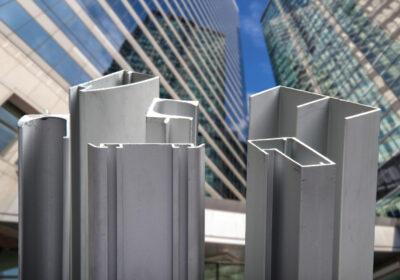
Often overlooked, yet playing a key role in the performance of many of these advanced systems, is one material: aluminum extrusions. From robotic workstations and conveyor systems to machine frames and automated production lines, aluminum extrusions provide the strength, precision, and modularity required for today’s industrial applications.
Aluminum’s lightweight properties, corrosion resistance, and design flexibility make it a preferred material for automation equipment and industrial machinery. As factories become smarter and more connected, aluminum extrusions continue to drive innovation in manufacturing environments.
Aluminum: The Material of Choice for Industrial Automation
Industrial automation systems require structures that are both robust and flexible. Equipment must operate continuously while supporting precise movement, integrated electronics, and regular system upgrades.
The advantages of aluminum for automation applications include:
- High strength-to-weight ratio
- Outstanding corrosion resistance
- Excellent dimensional accuracy
- Easy machining and fabrication
- Long service life
- Modular design flexibility
- Low maintenance requirements
These properties make aluminum extrusion for automation an ideal choice for manufacturers seeking efficiency without compromising structural performance.
Aluminum Profiles for Robotics: Designed for Precision
Robotic systems require stable and accurate structural platforms to achieve consistent performance.
Today, aluminum profiles for robotics are widely used in:
- Robotic work cells
- Cobot stations
- Pick-and-place equipment
- Automated assembly lines
- Vision inspection systems
- Material handling equipment
- End-of-line packaging systems
Precision aluminum extrusions minimize vibration and maintain alignment, allowing robotic systems to perform repetitive tasks with exceptional accuracy.
Machine Frame Aluminum for High-Performance Equipment
Every automated machine depends on a rigid structural frame.
The use of machine frame aluminum offers several engineering advantages over traditional steel structures.
These include:
- Reduced overall equipment weight
- Easier transportation and installation
- Improved energy efficiency
- Simplified maintenance
- Faster machine movement
- Greater modularity
In addition, aluminum extrusions can be custom-designed, allowing engineers to optimize frame geometry by placing strength where it is needed while eliminating unnecessary material.
The result is a lighter yet highly durable machine structure.
Modular Aluminum Framing: Built for Flexibility
Modern manufacturing facilities are constantly evolving.
As customer requirements change, production lines expand, equipment is relocated, and automation systems are upgraded.
This is where modular aluminum framing offers significant advantages.
Unlike welded steel structures, modular aluminum systems can be:
- Easily expanded
- Quickly reconfigured
- Disassembled without damage
- Upgraded with minimal downtime
- Integrated with new automation technologies
This flexibility supports continuous improvement initiatives while reducing long-term costs.
Industrial Automation Structures for Industry 4.0
Industry 4.0 depends on highly connected manufacturing environments where equipment communicates in real time.
Today’s industrial automation structures must support:
- IoT sensors
- Vision systems
- Control panels
- Electrical enclosures
- Cable management systems
- Pneumatic and hydraulic components
Aluminum extrusions make integrating these technologies significantly easier because mounting channels and functional features can be built directly into the profile.
This reduces assembly complexity while improving overall system organisation.
Custom Aluminum Extrusions for Design Freedom
One of the greatest advantages of aluminum extrusion technology is its design flexibility.
Custom profiles can incorporate:
- Reinforcement ribs
- Cable routing channels
- Mounting slots
- Fastening systems
- Sensor brackets
- Cooling channels
By integrating these features into a single extrusion, manufacturers reduce component counts, simplify assembly, and improve manufacturing efficiency.
Custom designs also eliminate the need for multiple secondary fabrication processes.
Lightweight Construction Improves Automation Performance
Weight has a direct impact on machine performance.
Lighter equipment provides:
- Faster acceleration
- Improved robotic movement
- Reduced motor loads
- Lower energy consumption
- Easier installation
- Reduced shipping costs
Aluminum weighs approximately one-third as much as steel, allowing manufacturers to improve efficiency without sacrificing structural integrity.
This advantage is particularly important in high-speed automation systems where dynamic performance is critical.
Corrosion Resistance in Industrial Environments
Industrial equipment often operates in demanding conditions, including exposure to:
- Moisture
- Cleaning chemicals
- Dust
- Temperature fluctuations
- Manufacturing fluids
Aluminum naturally forms a protective oxide layer that provides excellent corrosion resistance.
Additional surface treatments, such as anodizing or powder coating, further improve durability while enhancing appearance.
The result is lower maintenance costs and longer equipment life.
Supporting Sustainable Manufacturing
Sustainability has become a strategic priority for manufacturers worldwide.
Aluminum supports environmental goals because it is:
- 100% recyclable
- Lightweight and energy efficient
- Durable with a long service life
- Suitable for circular manufacturing initiatives
Aluminum extrusions support environmentally responsible manufacturing practices while reducing overall material consumption.
Applications in Modern Manufacturing
Aluminum extrusions are widely used in industrial environments, including:
- Automated workstations
- Conveyor systems
- Robotic cells
- Safety guarding
- Machine enclosures
- Inspection stations
- Assembly equipment
- Material handling systems
- Packaging machinery
- Testing equipment
Their versatility makes them one of the most widely used structural materials in modern factories.
What Can Art Aluminum Extrusion Offers for Automation Manufacturing
Can Art Aluminum Extrusion provides precision-engineered extrusion solutions for demanding automation and industrial applications.
Their capabilities include:
- Custom aluminum extrusion manufacturing
- Precision machine frame aluminum solutions
- Engineering support for automation system design
- Advanced CNC machining and fabrication
- Tight-tolerance manufacturing
- High-quality finishing services
- Scalable production for industrial projects
Can Art Aluminum Extrusion works closely with equipment manufacturers and engineering teams to develop custom solutions that improve performance, simplify assembly, and ensure long-term operational reliability.
From aluminum profiles for robotics and industrial automation structures to modular aluminum framing systems, Can Art Aluminum Extrusion delivers the quality and consistency required for today’s advanced manufacturing environments.
Aluminum in Smart Manufacturing: What’s Next
Automation continues to evolve through technologies such as:
- Artificial intelligence
- Collaborative robotics
- Autonomous material handling
- Digital twins
- Smart factories
- Predictive maintenance
These innovations depend on structural systems that are lightweight, adaptable, and capable of integrating rapidly changing technologies.
The flexibility and precision of aluminum extrusions support this transformation, ensuring they remain a fundamental material in the future of industrial manufacturing.
Conclusion
Automation and robotics require structural systems that combine precision, strength, flexibility, and efficiency. Aluminum extrusions meet these requirements by providing lightweight and durable solutions that support high-performance industrial applications.
From aluminum extrusion for automation and aluminum profiles for robotics to machine frame aluminum, industrial automation structures, and modular aluminum framing, aluminum extrusion technology continues to drive innovation across modern manufacturing.
By partnering with experienced manufacturers such as Can Art Aluminum Extrusion, businesses can develop advanced automation solutions that improve productivity, reduce lifecycle costs, and prepare their operations for the future of smart manufacturing.