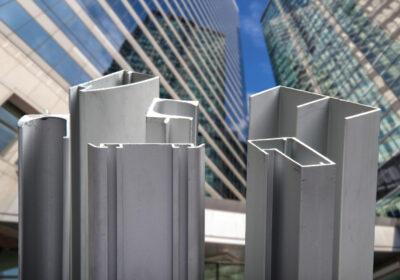
Every gram matters in engineering today. Whether it’s an electric vehicle, an industrial robot, a solar mounting system, or an architectural façade, manufacturers are always under pressure to reduce weight without compromising structural integrity.
Lightweight designs lead to better energy efficiency, lower transportation costs, easier installation, and support sustainability goals. But realizing those benefits takes more than simply choosing a lighter material, it takes smart engineering.
This is where aluminum extrusions shine. The excellent aluminum strength-to-weight ratio allows engineers the freedom to design lightweight structural components that are strong, durable, and tailored to specific applications. The use of aluminum, combined with state-of-the-art extrusion technology, allows manufacturers to produce high-performance products that meet today’s demanding engineering requirements.
Why Lighter Design Is an Engineering Priority
A strategic goal across industries is to minimize product weight.
The benefits of lighter products include:
- Reduced energy consumption
- Better fuel efficiency
- Higher payload capacity
- Easier transportation and installation
- Lower material consumption
- Reduced carbon emissions
Manufacturers across industries ranging from automotive and aerospace to construction and industrial automation are looking to maximize performance while minimizing weight.
This increasing demand has made lightweight aluminum design a pillar of modern product development.
The Strength-to-Weight Ratio of Aluminum: What Does It Mean?
One of the greatest engineering advantages of aluminum is its exceptional strength-to-weight ratio.
Aluminum provides excellent mechanical strength without adding the extra weight associated with heavier materials. It weighs approximately one-third as much as steel.
This combination enables manufacturers to produce products that are:
- Lightweight yet strong
- Durable in demanding environments
- Easier to handle and install
- More energy-efficient throughout their lifecycle
The aluminum strength-to-weight ratio makes it particularly attractive for applications where reducing mass directly improves performance.
Extrusion Technology for Improved Structural Performance
Extrusion is a manufacturing process that produces highly accurate cross-sectional profiles by forcing heated aluminum through a specially designed die.
Unlike standard stock materials, structural aluminum extrusion allows engineers to place material precisely where it is needed.
This enables designers to create profiles that:
- Increase stiffness
- Eliminate unnecessary material
- Improve load distribution
- Integrate multiple functions
- Reduce manufacturing complexity
For engineers, strength comes not from thicker or heavier sections, but from smarter profile geometry.
Designing Aluminum Profiles for Maximum Efficiency
The real advantage of aluminum extrusion is its design flexibility.
By engineering aluminum profiles, manufacturers can incorporate structural features directly into the extrusion, such as:
- Internal reinforcement ribs
- Hollow chambers
- Multi-wall configurations
- Integrated fastening channels
- Cable management pathways
- Mounting interfaces
These integrated features enhance structural performance while eliminating the need for additional parts or secondary fabrication.
The result is a lighter, more efficient, and stronger component.
Fundamental Design Principles for Lightweight Aluminum Structures
Careful engineering is required when designing high-performance aluminum extrusions.
Optimize Material Distribution
Instead of adding material uniformly throughout the profile, engineers strategically place it where loads are highest.
This provides greater stiffness without adding unnecessary weight.
Use Hollow Sections
Hollow sections provide excellent structural performance while using significantly less material than solid components.
They also improve torsional rigidity and bending strength.
Integrate Functional Features
Mounting points, fastening surfaces, and reinforcement features are integrated directly into the extrusion, eliminating the need for additional brackets and hardware.
This supports both weight reduction and part consolidation.
Design for Manufacturability
Efficient extrusion designs simplify production, improve consistency, and reduce overall manufacturing costs.
Early collaboration between design engineers and extrusion specialists helps maximize both performance and production efficiency.
Industries That Benefit from Lightweight Structural Components
Aluminum extrusions are transforming products across many industries.
Automotive
Automotive manufacturers use lightweight structural components to improve fuel economy, extend electric vehicle range, and reduce emissions.
Applications include:
- Battery housings
- Crash management systems
- Chassis reinforcements
- Roof rails
- Structural cross members
Industrial Automation
Automation equipment benefits from lighter machine frames that improve motion accuracy while reducing energy consumption.
Renewable Energy
Solar mounting systems and wind infrastructure rely on lightweight aluminum structures for easier installation and long-term durability.
Construction
Architectural systems use structural aluminum extrusion to create strong, lightweight curtain walls, façades, bridges, and modular buildings.
Transportation
Manufacturers of rail, marine, and commercial vehicles use aluminum to increase payload capacity and improve operating efficiency.
Balancing Weight, Strength, and Cost
Weight savings should always be achieved without compromising safety or durability.
When designing lightweight aluminum structures, several factors must be balanced:
- Structural performance
- Manufacturing efficiency
- Material utilization
- Production costs
- Long-term reliability
Advanced computer-aided engineering and simulation software allow manufacturers to optimize profile geometry before production begins, reducing development time and project costs.
Additional Advantages of Aluminum Extrusions Beyond Weight Reduction
The benefits of aluminum extend well beyond reducing weight.
Corrosion Resistance
Aluminum naturally forms a protective oxide layer that provides excellent resistance to corrosion in demanding environments.
Design Flexibility
Custom extrusion profiles can be designed for virtually any application, allowing engineers to create complex geometries that are difficult or expensive to manufacture using other methods.
Sustainability
Aluminum is 100% recyclable without losing its mechanical properties, making it an environmentally responsible material for modern manufacturing.
Reduced Assembly Complexity
Integrated extrusion designs reduce the number of parts required, shorten assembly times, and improve overall product reliability.
Common Challenges in Lightweight Design
Although aluminum is remarkably versatile, successful lightweight design requires careful engineering.
Challenges may include:
- Managing complex load conditions
- Optimizing wall thickness
- Controlling deflection
- Balancing stiffness and weight
- Achieving tight dimensional tolerances
An experienced extrusion manufacturer can help address these challenges early in the design process.
The Role of Can Art Aluminum Extrusion in Advanced Engineering
Can Art Aluminum Extrusion helps manufacturers develop aluminum solutions that maximize strength while minimizing weight.
Their capabilities include:
- Custom structural aluminum extrusion development
- Engineering support for profile optimization
- Precision extrusion manufacturing
- Advanced fabrication and CNC machining
- Tight tolerance control
- High-quality finishing solutions
- Scalable production for demanding industrial applications
Can Art Aluminum Extrusion works with customers from concept through production to optimize profile designs for performance, manufacturability, and cost efficiency.
Whether serving automotive, renewable energy, industrial automation, transportation, or architectural projects, Can Art Aluminum Extrusion delivers engineered solutions that meet today’s increasingly demanding performance requirements.
The Future of Lightweight Engineering
Lightweight engineering will continue driving innovation as industries pursue greater efficiency and lower environmental impact.
Emerging technologies such as:
- Electric vehicles
- Robotics
- Smart infrastructure
- Renewable energy systems
- Advanced manufacturing
depend on materials capable of delivering exceptional strength without unnecessary weight.
Aluminum extrusions will remain central to these developments because of their unique combination of performance, versatility, and sustainability.
Conclusion
Designing for strength no longer means adding more material. Instead, it means engineering smarter solutions that maximize performance while minimizing weight.
Through intelligent profile design, structural optimization, and advanced manufacturing, aluminum extrusions enable manufacturers to create lightweight structural components that meet demanding performance expectations across a wide range of industries.
From lightweight aluminum design and engineering aluminum profiles to structural aluminum extrusion solutions that improve efficiency and durability, aluminum continues to redefine modern engineering.
Working with established manufacturers like Can Art Aluminum Extrusion enables companies to develop innovative products that achieve the ideal balance of strength, weight, sustainability, and long-term value.