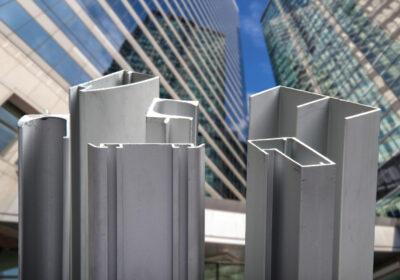
Electric vehicles are rewriting the rules of automotive engineering. Range anxiety, battery efficiency, crash safety, and sustainability are no longer side considerations, they are central design priorities. In this new reality, aluminum extrusions for EVs are not just useful components; they are strategic enablers.
For manufacturers like Canart, the shift toward lightweight automotive materials is not a trend, it is a structural transformation of how vehicles are designed and built.
The Lightweight Imperative in Electric Vehicles
In internal combustion vehicles, added weight mainly affects fuel efficiency. In EVs, weight directly impacts range, battery size, charging efficiency, and overall performance.
Heavier vehicles require:
- Larger battery packs
- More structural reinforcement
- Greater energy consumption per kilometre
This creates a cascading design challenge. The solution lies in material selection. Lightweight structures reduce the burden on the battery, allowing manufacturers to either extend range or reduce battery size and cost.
This is where EV lightweighting benefits become measurable and meaningful.
Why Aluminum Extrusions Make Sense for EV Platforms
Aluminum offers a unique combination of properties that align perfectly with EV requirements:
- High strength-to-weight ratio
- Excellent corrosion resistance
- Superior thermal conductivity
- Recyclability and sustainability
- Design flexibility through extrusion
Unlike stamped steel, aluminum extrusions allow engineers to create complex cross-sections tailored to specific performance needs. This makes them ideal for integrating structural strength, thermal channels, and mounting features into a single optimized component.
Aluminum profiles in electric vehicles are increasingly used in:
- Battery enclosures and trays
- Crash management systems
- Structural cross members
- Side sills and roof rails
- Motor housings
- Thermal management components
The ability to engineer multifunctional profiles reduces part count, simplifies assembly, and lowers overall vehicle weight.
Battery Efficiency and Thermal Management
The battery is the most expensive and performance-critical component in an EV. Protecting it while managing heat efficiently is non-negotiable.
Aluminum extrusions contribute by:
- Forming rigid yet lightweight battery housings
- Providing integrated cooling channels
- Enhancing heat dissipation
- Improving structural crash protection
Because aluminum has strong thermal conductivity, it supports more efficient battery cooling systems. This helps maintain optimal operating temperatures, extending battery life and improving safety.
Crash Performance Without Weight Penalty
Safety standards for EVs are stringent, especially around battery protection. Aluminum extrusions can be engineered with specific wall thicknesses, internal ribs, and energy-absorbing geometries to enhance crash performance.
The advantage lies in customization. Instead of overbuilding with heavy steel reinforcements, engineers can design aluminum profiles that absorb impact energy while maintaining a lightweight structure.
This balance between strength and weight is central to EV platform innovation.
Design Freedom and Manufacturing Efficiency
Extrusion technology enables complex shapes that would be difficult or costly to produce using traditional methods. This opens the door to:
- Integrated mounting systems
- Hollow multi-chamber profiles
- Optimized load paths
- Reduced welding requirements
Fewer parts mean fewer joints, lower assembly time, and improved dimensional consistency.
For OEMs, this translates into production efficiency. For end users, it translates into improved vehicle performance.
Sustainability and Circular Economy Advantages
Electric vehicles are often positioned as environmentally responsible alternatives. The materials used in them must align with that promise.
Aluminum stands out among sustainable automotive materials because:
- It is 100 percent recyclable without loss of properties
- Recycling requires significantly less energy than primary production
- It supports long lifecycle performance
Using aluminum extrusions for EVs strengthens the sustainability narrative by reducing vehicle weight and supporting circular material flows.
Lightweight structures also contribute to lower operational emissions through improved energy efficiency over the vehicle’s lifetime.
The Strategic Value of EV Lightweighting
The benefits of lightweighting extend beyond performance metrics. They influence:
- Total vehicle cost
- Battery size optimization
- Driving dynamics
- Structural integration
- Lifecycle environmental impact
When engineers leverage aluminum profiles in electric vehicles, they unlock multiple layers of value simultaneously.
This is why EV lightweighting is not just an engineering tactic, it is a competitive strategy.
The Road Ahead
The EV market is evolving rapidly. As battery technologies improve and performance expectations rise, material innovation will remain at the centre of progress.
Lightweight automotive materials will continue to define the next generation of vehicle platforms. Among them, aluminum extrusions offer a proven, scalable, and sustainable solution.
For manufacturers like Canart, the opportunity lies in delivering precision-engineered aluminum profiles that meet the structural, thermal, and environmental demands of modern electric mobility.
In the future of transportation, every kilogram matters. And aluminum extrusions are helping ensure that each one works smarter, not harder.